KNOWLEDGE CENTER

Enterprise AI Insights, Research & Implementation Frameworks

Practical guidance on Agentic AI, Enterprise Automation, AI Governance, Digital Workforce Transformation, ISO 42001 and Enterprise AI implementation.

AWAIA
INSIGHTS

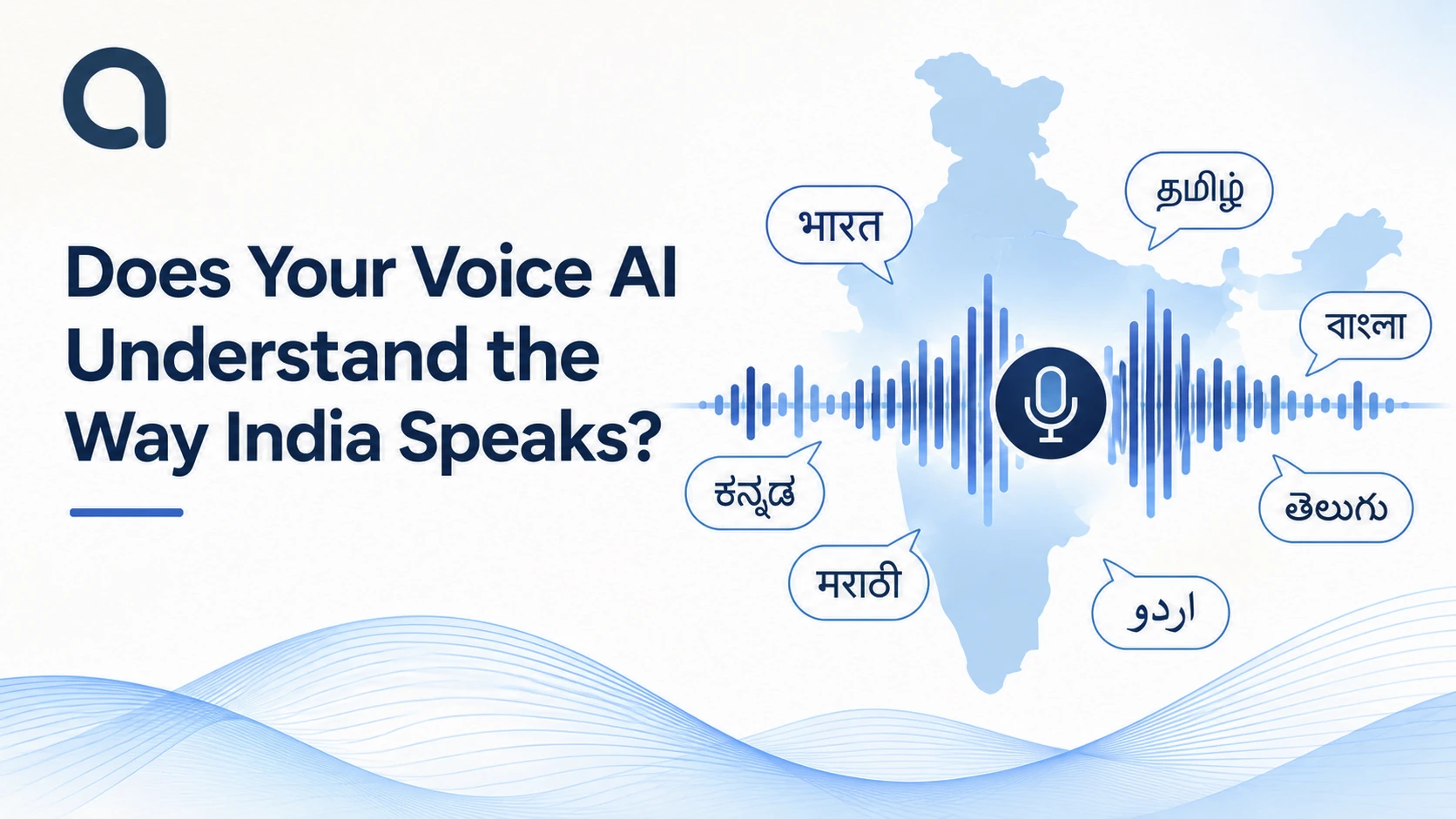
Does Your Voice AI Understand the Way India Speaks?

AWAIA illustration of India's linguistic diversity in Voice AI, featuring a map of India, microphone, audio waveforms and speech bubbles in seven Indian languages.

Global voice AI platforms fail systematically in India because they rely on monolingual acoustic pipelines, rigid orthography, and Levenshtein-based error metrics. Enterprise success demands purpose-built streaming Indic architectures, phoneme-aware transliteration, and semantic evaluation layers calibrated for spontaneous intra-sentential code-switching.

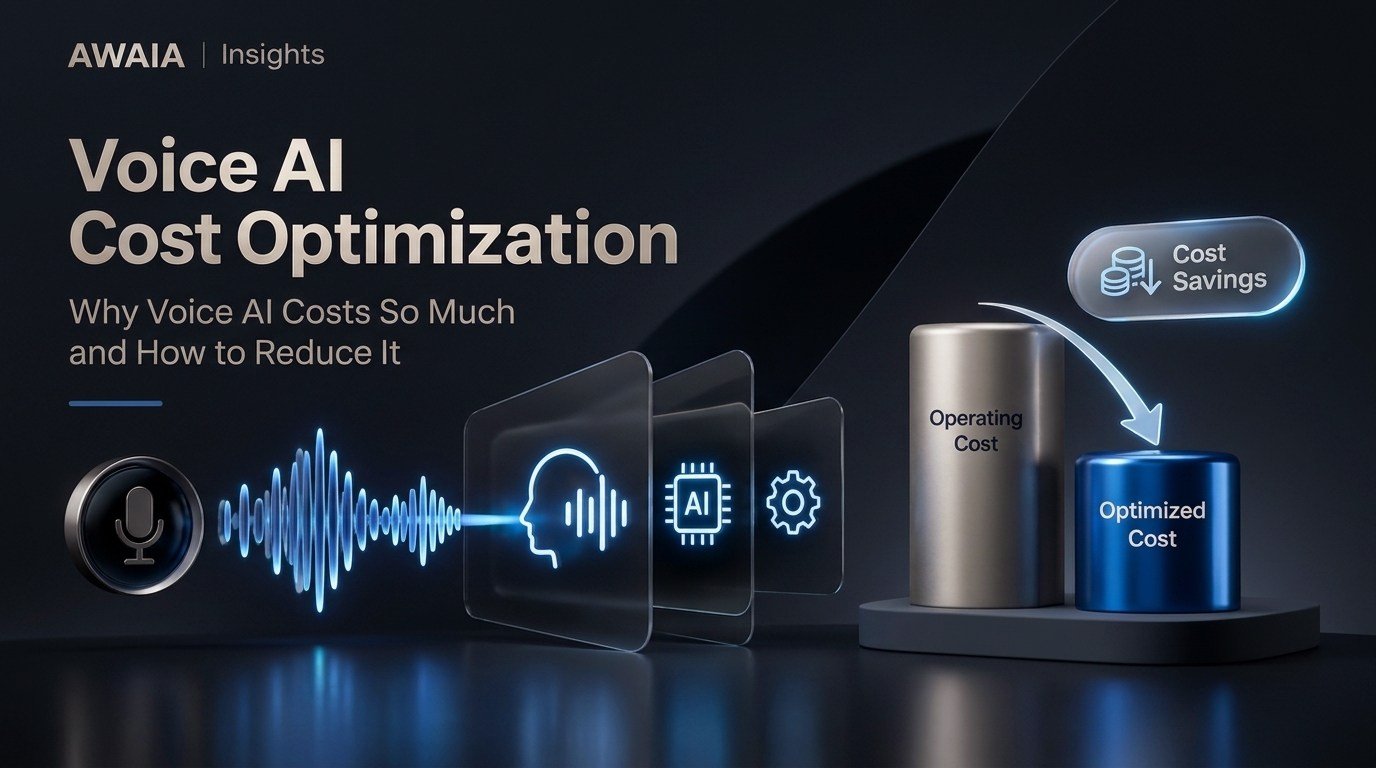
Why Does Voice AI Cost So Much? Want to Bring the Cost Down?

Why Does Voice AI Cost So Much? Want to Bring the Cost

Enterprise Voice AI initiatives frequently encounter severe budget overruns because organizations calculate financial feasibility using isolated model API tokens rather than the compounded runtime mechanics of live conversational audio. A single live customer dialogue binds concurrent telephony streams, real-time speech transcription, context-expanding inference, speech synthesis, and stateful orchestration. Achieving operational cost sustainability requires moving beyond brute-force frontier model invocation toward structured context management, deterministic task offloading, and optimizing for Cost Per Resolved Interaction rather than unit token price.

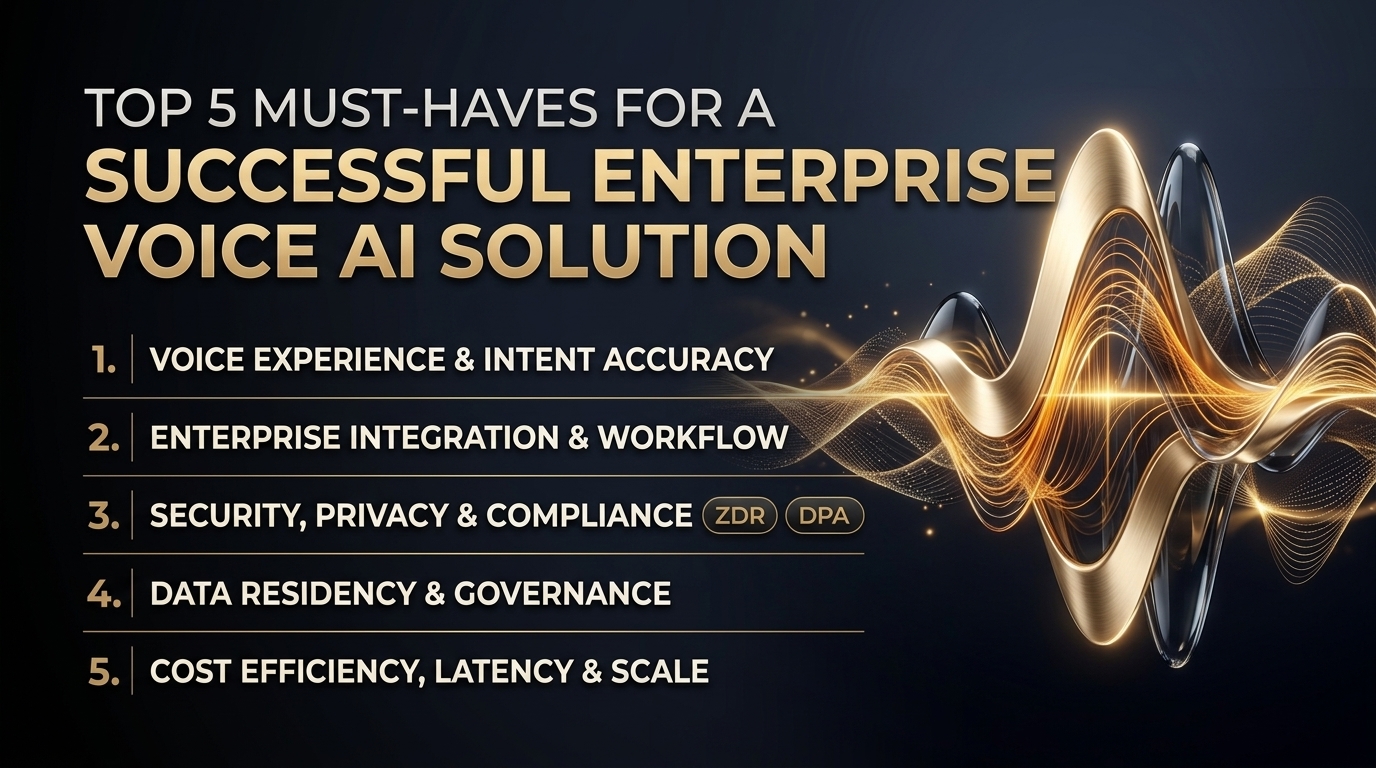
Top 5 Must-Haves for a Successful Enterprise Voice AI Solution

Top five must-haves for a successful enterprise Voice AI solution.

Deploying enterprise-grade voice AI requires moving beyond superficial API aggregations toward an engineered, low-latency infrastructure that balances streaming acoustic telemetry with deterministic dialogue control. The difference between an abandoned voice experiment and a production-grade asset lies in five non-negotiable architectural layers: full-duplex streaming transport, sub-second interruption handling, schema-validated multi-agent routing, zero-trust network segmentation, and embedded compliance governance.

Can Banks Automate Legal Enforcement Workflows Using AI Agents?

Can Banks Automate Legal Enforcement Workflows Using AI Agents

Transitioning from GenAI drafting tools to agentic legal enforcement architectures enables Tier-1 banks to reduce operational overhead by 30-40% while establishing cryptographically auditable workflows for dispute resolution and regulatory compliance. This shift demands a stateful orchestration layer that decomposes complex legal tasks into adaptive, multi-step executions, mitigating logic-drift through immutable logging and strategic Human-in-the-Loop interventions.[1]

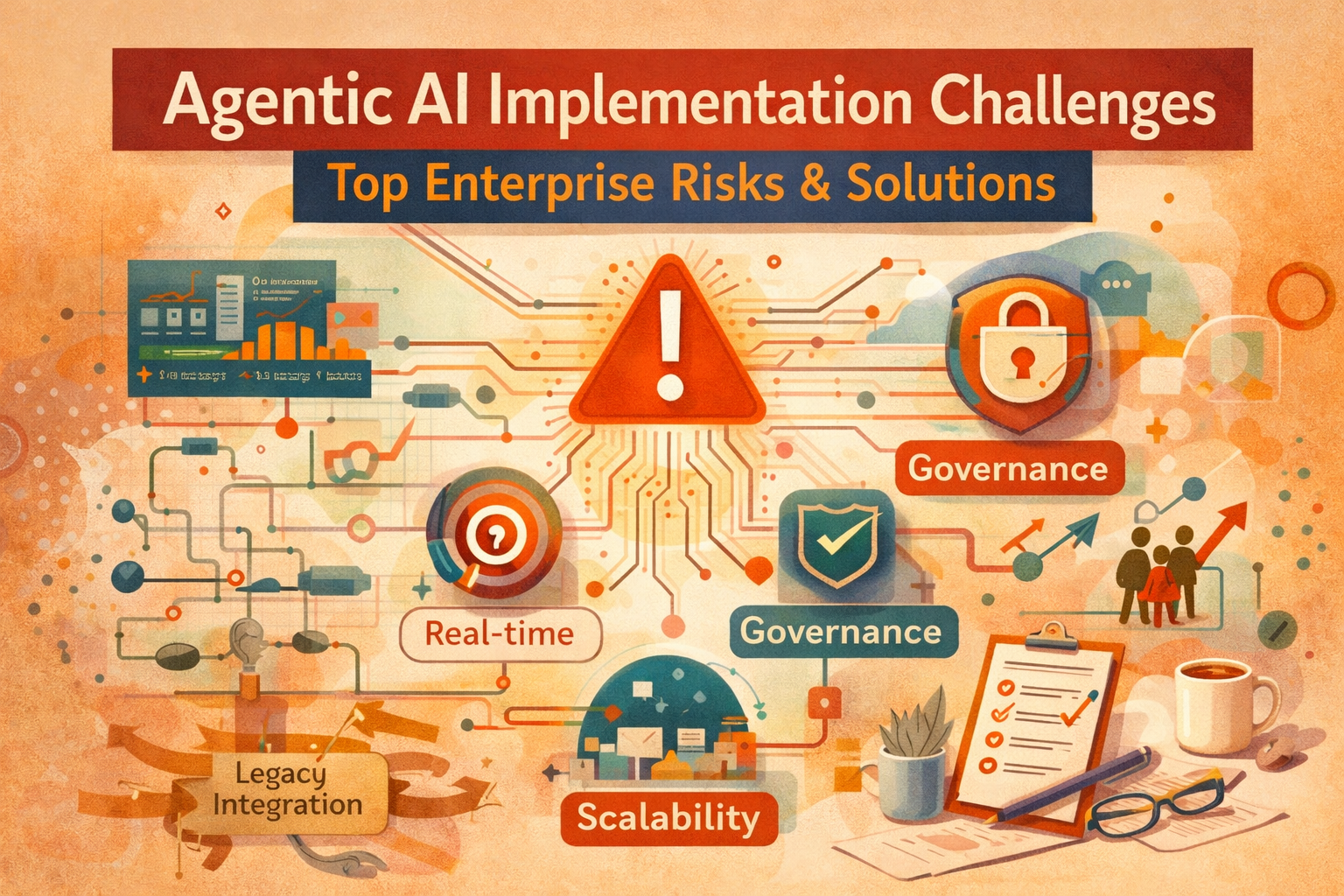
AI Agents Fail in Production — Why They Work in Demos but Break in Real Systems

The enterprise transition from pilot to production for Agentic AI encounters a governance barrier, where the inherent unpredictability of Large Language Models generates operational vulnerabilities. Systems lacking separation between reasoning and execution exhibit elevated failure risks from erratic state changes and absent safeguards. Sustainable value in Multi-Agent Systems emerges not solely from model sophistication, but from a dedicated Governance Layer embedding business rules at the architectural core.

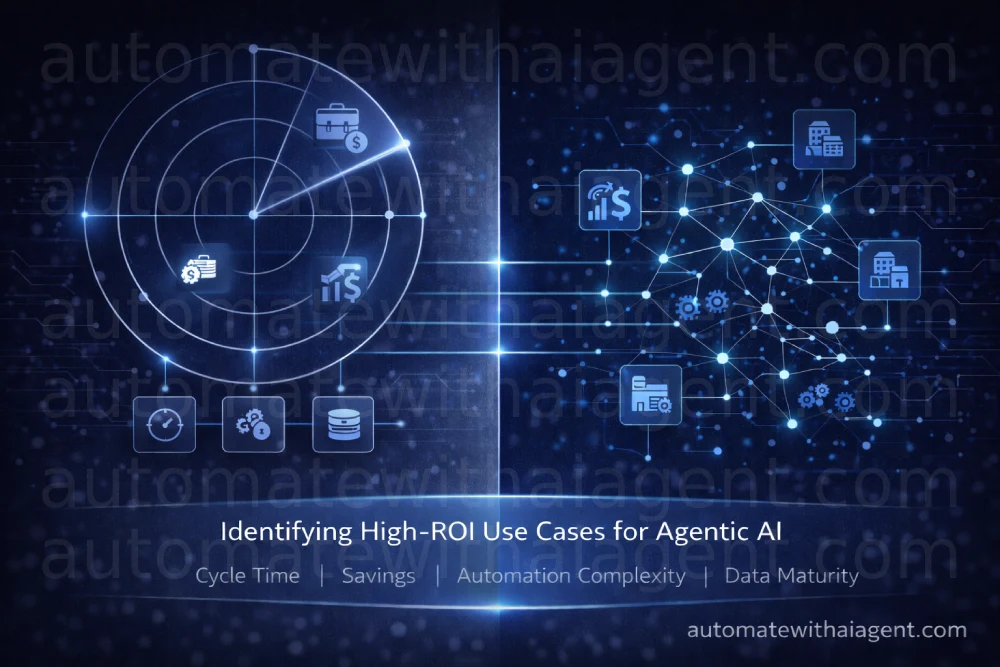
How to Identify High-ROI Use Cases for Agentic AI in the Enterprise

Identifying high-ROI AI use cases

The central tension in agentic AI adoption is not technological but organizational: enterprises must balance the autonomy that generates value against the control mechanisms required to manage risk. Organizations that treat agentic AI as a phased capability—beginning with low-complexity, high-confidence use cases in HR and customer service—establish the operational discipline, data infrastructure, and governance posture necessary to scale into industrial automation and supply chain optimization. The data shows that single-agent deployments in HR and customer service generate 29% ROI within two years, scaling to 174% by year five, but only when preceded by rigorous architecture decisions about agent orchestration, inter-system protocols, and explainability frameworks. The organizations that will extract maximum value are those that treat the first 18 months not as a race to deployment, but as an investment in architectural maturity.
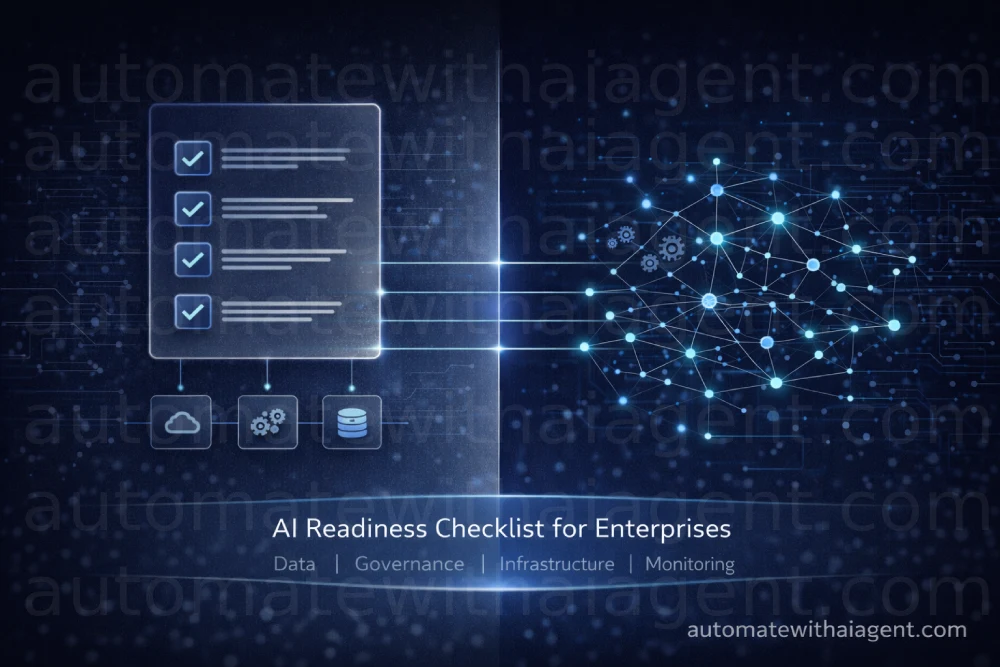
AI Readiness Checklist for Enterprises (Before You Invest in AI Agents)

AI Readiness Checklist for Enterprises

The central tension in enterprise agentic AI adoption is not technological—it is architectural. Most organizations can acquire AI agent technology; almost none can operationalize it responsibly. Research indicates that only [1] 24% of enterprises possess adequate guardrails and live monitoring to control agent actions in production environments. The remaining 76% face a choice: proceed with uncontrolled pilots that consume capital without generating measurable ROI, or invest in foundational readiness before deployment. The cost of skipping readiness is not merely wasted budget—it is operational risk, compliance exposure, and erosion of stakeholder trust in AI governance.

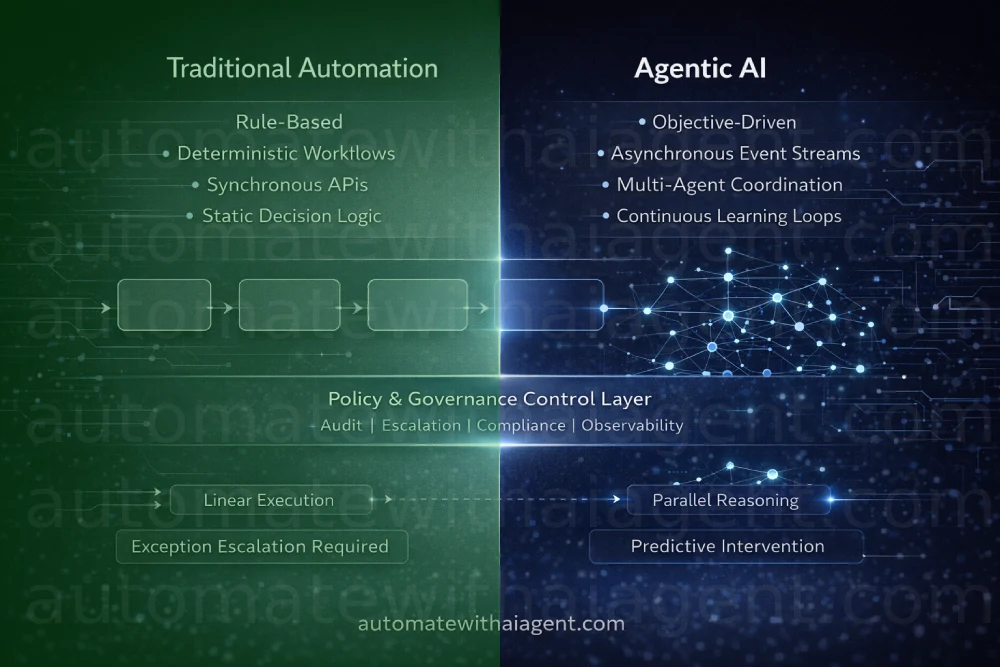
Agentic AI vs Traditional Automation: What Enterprises Need to Know

Traditional automation vs agentic AI comparison

The fundamental tension facing enterprise architects is not whether to adopt agentic AI, but how to architect decision authority across hybrid systems where traditional automation handles deterministic processes while agentic systems manage exception handling, cross-functional optimization, and proactive foresight. Organizations that treat these as complementary rather than competitive unlock operational velocity gains of 30-40% in exception resolution and predictive intervention, though only when governance frameworks establish clear boundaries around agent autonomy, data provenance, and escalation protocols. The hidden risk is architectural fragmentation: enterprises that deploy agentic AI as an overlay without redesigning integration patterns and data flows create shadow decision-making systems that operate outside audit trails and compliance checkpoints.

Explore with AI
AWAIA Intelligence
Powered by AWAIA™
AI Online

Explore Solutions

What are you exploring today? I can help with MEERA™, LEA™, ISO 42001, AI Governance and Enterprise AI initiatives.