Scale Enterprise Intelligence.
Architect the Digital Workforce.

Deploying Multi-Agent Coordinated Workflows with Autonomous Decision-Making Capabilities.

Can Banks Automate Legal Enforcement Workflows Using AI Agents?

Can Banks Automate Legal Enforcement Workflows Using AI Agents

Transitioning from GenAI drafting tools to agentic legal enforcement architectures enables Tier-1 banks to reduce operational overhead by 30-40% while establishing cryptographically auditable workflows for dispute resolution and regulatory compliance. This shift demands a stateful orchestration layer that decomposes complex legal tasks into adaptive, multi-step executions, mitigating logic-drift through immutable logging and strategic Human-in-the-Loop interventions.[1]
AI Agents Fail in Production — Why They Work in Demos but Break in Real Systems

The enterprise transition from pilot to production for Agentic AI encounters a governance barrier, where the inherent unpredictability of Large Language Models generates operational vulnerabilities. Systems lacking separation between reasoning and execution exhibit elevated failure risks from erratic state changes and absent safeguards. Sustainable value in Multi-Agent Systems emerges not solely from model sophistication, but from a dedicated Governance Layer embedding business rules at the architectural core.

How to Identify High-ROI Use Cases for Agentic AI in the Enterprise

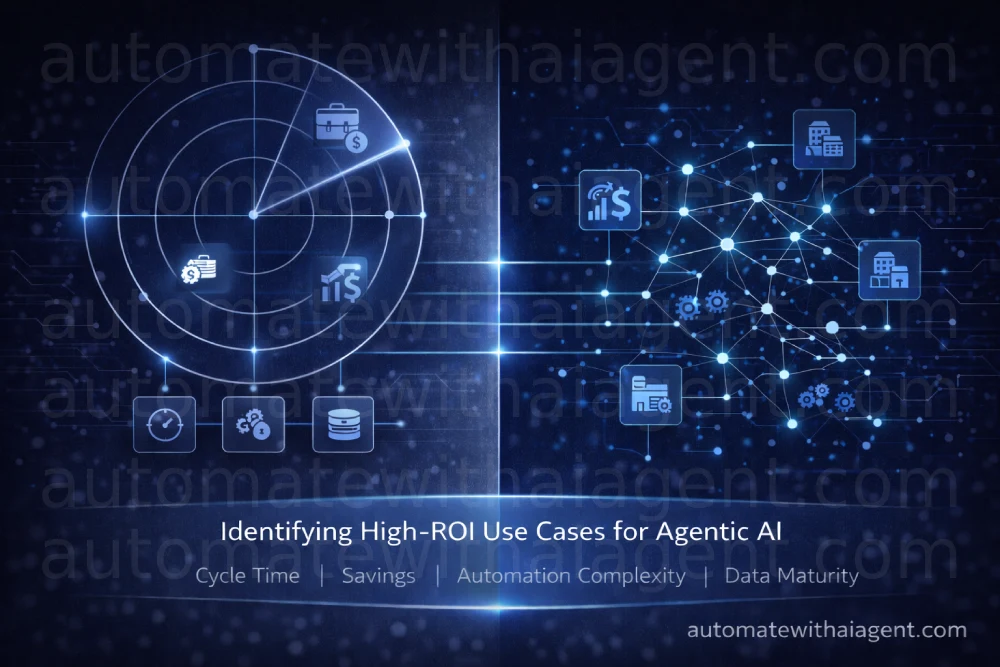
Identifying high-ROI AI use cases

The central tension in agentic AI adoption is not technological but organizational: enterprises must balance the autonomy that generates value against the control mechanisms required to manage risk. Organizations that treat agentic AI as a phased capability—beginning with low-complexity, high-confidence use cases in HR and customer service—establish the operational discipline, data infrastructure, and governance posture necessary to scale into industrial automation and supply chain optimization. The data shows that single-agent deployments in HR and customer service generate 29% ROI within two years, scaling to 174% by year five, but only when preceded by rigorous architecture decisions about agent orchestration, inter-system protocols, and explainability frameworks. The organizations that will extract maximum value are those that treat the first 18 months not as a race to deployment, but as an investment in architectural maturity.