Scale Enterprise Intelligence.
Architect the Digital Workforce.

Deploying Multi-Agent Coordinated Workflows with Autonomous Decision-Making Capabilities.

Torq’s $140M Agentic AI SOC Bet: Architecture, Autonomy, and the New Security Value Chain

Torq’s $140 million Series D at a $1.2 billion valuation

Torq’s $140 million Series D at a $1.2 billion valuation is not just another security funding headline; it is a capital-backed assertion that autonomous, agent-based SOCs are moving from experiment to reference architecture. The round, led by Merlin Ventures with participation from existing institutional investors, is explicitly framed around scaling an “AI SOC Platform” built on advanced hyperautomation, AI-led alert triage, and analyst fatigue reduction to deliver full operational autonomy for enterprises and government agencies [1]. For CIOs and Enterprise Architects, the real signal is strategic: agentic AI is being positioned as the primary control plane for security operations, with humans supervising edge cases rather than orchestrating every step. This introduces a new design tension—how far to push operational autonomy in the SOC stack without eroding governance, assurance, and compliance obligations.

Architectural Autonomy in Multi-Agent AI: Balancing Parallel Gains Against Coordination Costs

Multi-agent AI Systems Architecture

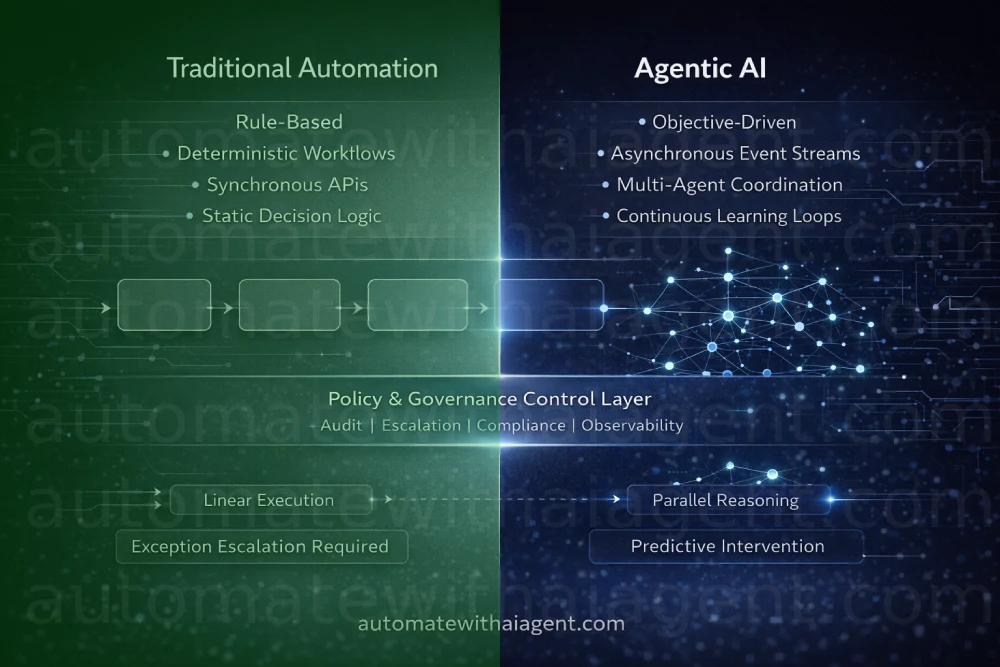
Google DeepMind’s empirical analysis across 180 experiments demonstrates multi-agent systems deliver up to 80% performance uplift on parallelizable tasks like financial analysis via centralized coordination, but degrade sequential reasoning by 39-70% due to coordination overhead—pushing enterprises toward task-specific architectural choices for true scalability.[1][3]

ServiceNow Armis Acquisition: Forging Agentic Cybersecurity Resilience Across IT-OT Frontiers

ServiceNow-Armis acquisition

ServiceNow’s $7.75 billion acquisition of Armis enables 30-50% reductions in security tool sprawl and operational inefficiencies through unified asset visibility across IT, OT, and medical devices.[1] This integration accelerates agentic AI deployment for proactive threat orchestration, potentially cutting mean time to response (MTTR) by 40-60% via automated workflows.[1] Enterprises face a 25-35% expanded attack surface from cyber-physical convergence, making this a non-negotiable pivot for scalable AI governance.[1]