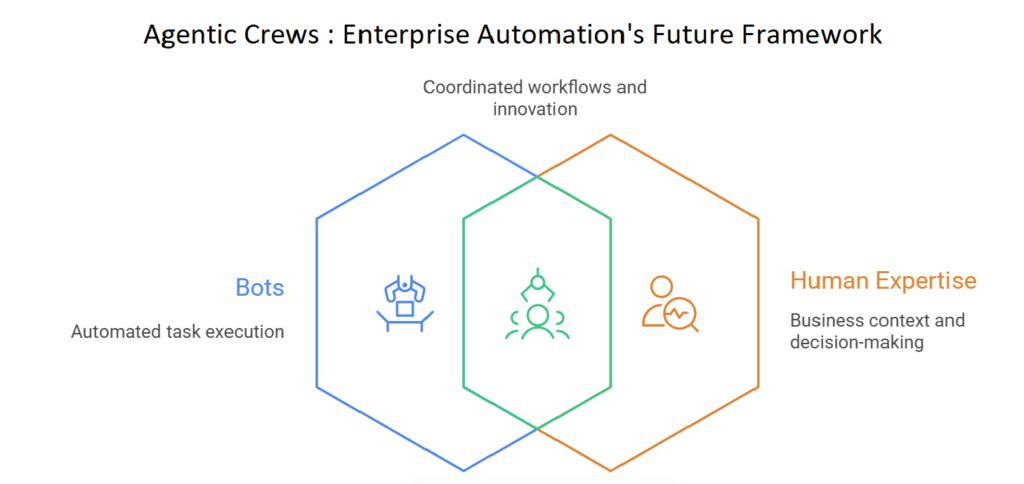
SILICON VALLEY — Organizations are adopting Agentic Crews: Enterprise Automation’s Future Framework, where AI teams evolve into agentic systems that act, learn, and coordinate across workflows faster than leaders can redesign processes and governance, according to a joint study by
Agentic Crews Reshaping Enterprise Automation
A global survey of over 2,000 respondents by MIT SMR and BCG reveals 35% of organizations have begun using agentic AI, with 44% planning adoption soon, outpacing governance redesign[1]. Unlike traditional automation for structured tasks, agentic AI in AI teams provides adaptability, continuous learning, and human-like coordination, enabling cost reductions alongside revenue growth and innovation acceleration[1][2]. For deeper technical insights, see Arxiv research on agentic systems.
76% of executives view agentic AI as a co-worker rather than a tool, with decision-making authority expected to grow 250%, per BCG and MIT findings[3]. This shift demands “HR for AI,” including onboarding and evaluation of agents like employees.
Key Research Findings on Adoption
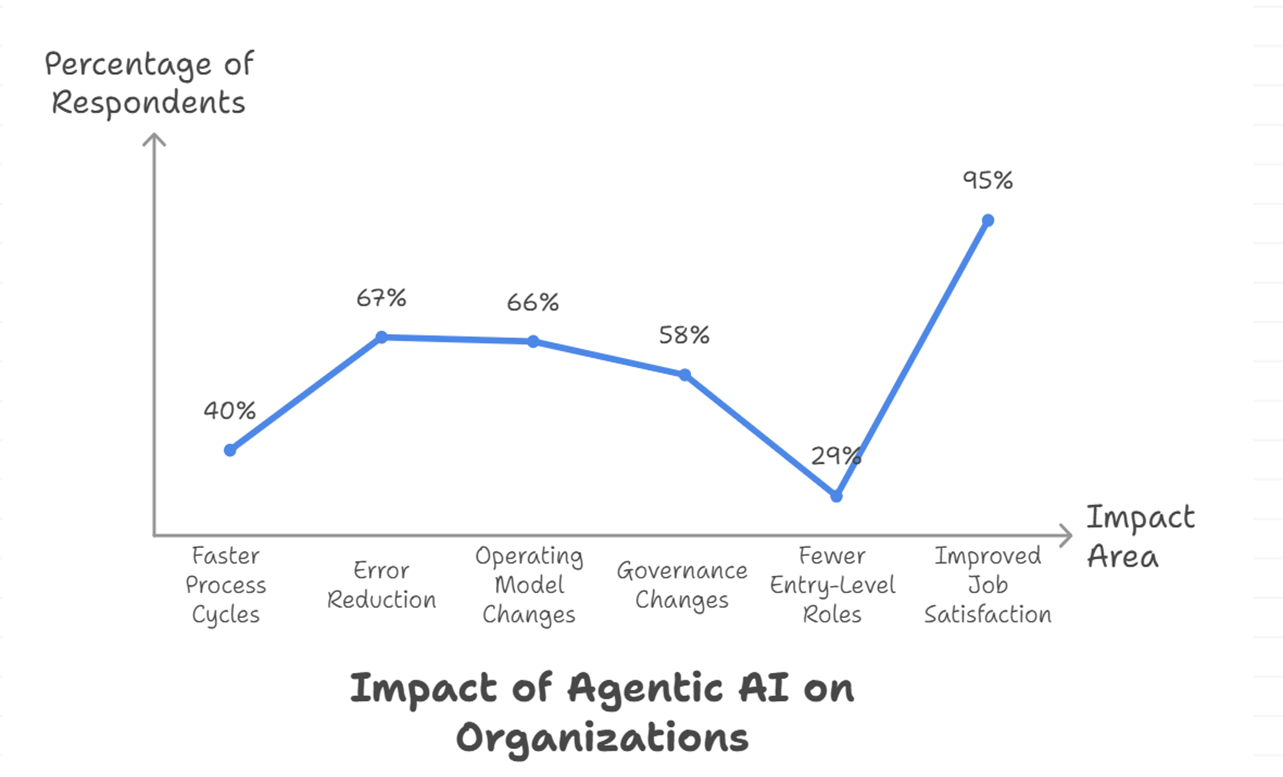
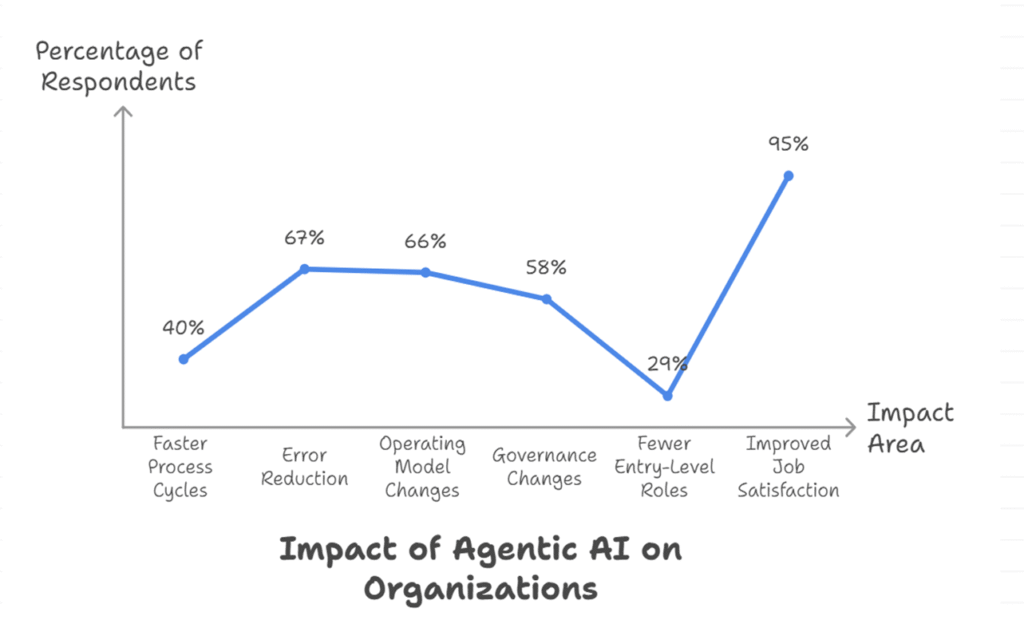
The MIT SMR-BCG study, based on 2,102 respondents across 21 industries, highlights agentic AI’s dual role: tool-like efficiency and colleague-like adaptability in AI teams[1]. Organizations report up to 40% faster process cycles, 67% error reduction, and improved human-machine collaboration[4].
- 66% expect fundamental changes to operating models and roles within three years[3].
- 58% of AI leaders seek governance changes; 29% anticipate fewer entry-level roles[3].
- 95% of employees in high-adoption firms report improved job satisfaction[3].
From Bots to Coordinated Agentic Crews
Leaders must evolve from bolt-on bots to hybrid Agentic Crews with defined workflows, decision rights, and business context, as urged by BCG[2]. Examples include Goodwill’s textile-sorting agent sparking supply-chain reengineering[1] and ADP’s platform balancing standardization and customization.
Check LangChain’s GitHub for open-source agentic AI tools to build these teams.
Challenges and Governance Needs
Rapid deployment risks uncoordinated adoption; 47% lack strategy[5]. Leaders must redesign models for ambiguity in decision rights, reduce middle management, and embed workflow options toggling efficiency and adaptability[1].
Strategic Actions for Leaders
Executives should clarify value objectives, build governance hubs, productize workflows, and invest in compliant platforms[2]. For developers, integrate with tools like n8n documentation for scalable agentic workflows. Thoughtful adoption unlocks cost savings, revenue expansion, and innovation, per MIT SMR-BCG[1].